How to Elevate Any Outfit
Accessories transform ordinary clothing into outfits brimming with personality. A simple base like jeans and a shirt provides the foundation, but thoughtful additions—such as necklaces, belts, and bags—infuse individual flair and create balance. While selecting these pieces can feel daunting, involving considerations of colour, material, and scale, the process boils down to intentional choices that reflect your style.
Accessories enhance details without overshadowing the main attire, adapting to everyday errands and special events. Whether curating a capsule wardrobe or refreshing existing pieces, this approach elevates basic looks into polished ensembles.
The Psychology Behind Great Accessorising
Accessories serve as silent communicators of personality, conveying traits like confidence or creativity through subtle cues. Fashion psychologists note that a delicate silver bracelet might signal poised elegance, while layered beaded necklaces evoke artistic vibrancy. Researchers explain how accessories influence first impressions through subtle design choices.
Take a neutral outfit of black pants and a grey top: small pearl studs lend an air of quiet authority, whereas colourful enamel pins inject playful energy. These choices direct attention and shape perceptions—I once added simple hoops to a meeting ensemble and found colleagues responding with more warmth and approachability.
Stylists emphasise aligning selections with personal context to influence how others view your mood or heritage. A silk scarf, for instance, draped over the shoulders, projects openness at casual gatherings. During a team photoshoot, we pinned vintage brooches to blazers, instantly making everyone appear more distinctive and engaged.
Essential Rules for Accessorising Outfits

Start by identifying a focal point in your outfit, then build around it to ensure harmony rather than chaos. Treat your clothing as a canvas where accessories enhance without competing.
Rule 1: Establish a Clear Focal Point
Anchor your look with one standout accessory that draws the eye, supported by subtler pieces. Fashion editors recommend selecting statement pieces that align with face shapes and outfit tones.
A bold pendant necklace highlights the neckline and complements facial features, while a sculpted cuff bracelet adds definition to sleeve edges on flowy shirts. Handbags with metallic accents offer functionality with visual impact, and leather-strap watches convey reliability. Choose your hero piece first, then layer minimally—pair a wide cuff with slim rings, avoiding bulky chains. Styling guides from Harper’s Bazaar detail avoiding overload by limiting bold elements to one per zone.
I once overloaded a dinner look with flashy rings, a big-buckle belt, and dangling earrings; it felt chaotic until I removed the earrings, allowing the rest to shine.
Rule 2: Embrace Coco Chanel’s “One Less” Philosophy
Before leaving, glance in the mirror and remove one accessory—this timeless advice from Coco Chanel curbs excess and promotes elegant simplicity. Modern interpreters apply this to contemporary wardrobes for timeless appeal. It values negative space, letting key items breathe and suiting any setting, from the office to the weekend. InStyle articles update this classic tip with examples for seasonal trends.
During a wardrobe refresh, we stripped extra layers from casual dresses, resulting in outfits that earned more compliments for their effortless vibe.
Rule 3: Balance Complexity with Simplicity
Offset intricate clothing with understated accessories, and vice versa, to give the eye respite—like pairing busy prints with neutrals. For patterned dresses, opt for plain metal studs, a slim belt, and a structured bag to spotlight the fabric. Stylists recommend this method for outfits with intricate designs to achieve balanced visual appeal.
Plain bases invite bolder accents: a simple white shirt pairs beautifully with chunky beads or long earrings. For mixed elements, like a printed top and solid skirt, echo a print colour in a simple accessory shape. Advanced techniques for coordinating accessories across mixed outfit complexities ensure cohesion.
Rule 4: Navigate Colour Coordination Like a Pro
View colours holistically, using theory to create unified looks. Stick to tonal families for seamless flow—off-white bags with light jackets or blue accents with jeans. Fashion guides highlight tonal matching for professional and everyday tonal dressing strategies.
Introduce one contrasting pop for energy, like a bright bag against dark pants, but limit it to avoid overload. Expert strategies on using contrasting colours effectively in accessory selection. A yellow belt once enlivened my gray suit at a meeting, drawing compliments without dominating.
Rule 5: Match Accessories to Your Body Shape
Select pieces that harmonise with your proportions to elongate or define as desired. For petite frames, choose collarbone-length necklaces, medium handbags, and face-framing earrings to avoid overwhelming. Curvier figures benefit from bold necklaces and waist-cinching belts that highlight strengths. Fashion experts sharing ways to select jewelry for different body shapes and sizes.
Taller builds suit layered chains, oversized earrings, and wide cuffs for added presence. Detailed advice on proportion rules for accessories from style guides helps refine choices that feel balanced and comfortable.
Rule 6: Combine Textures for Depth
Layer textures mindfully to add dimension without clutter. Pair natural elements like wood or stone with sleek metals—pearl drops against leather straps—for contrast. Style sites explain successful pairings of organic and metallic textures in daily wear.
Woven cords and suede evoke bohemian flair for casual days, while leather with silk suits professional shifts. Limit to two or three per outfit—tips on limiting material counts for cohesive accessory styling. A wooden cuff, layered with fabric, wraps once, elevating a simple dress at the market.
Tailoring Accessories to Occasions and Outfit Details
Adapt selections to the event for polished relevance. Formal affairs call for timeless simplicity: pearl studs, silk scarves, and clutches that enhance without distracting. Detailed guidelines on selecting formal wear accessories for professional events.
Workplaces favour subtle signals of professionalism—simple rings, structured totes, and minimalist watches. Casual outings allow layering, like stacked necklaces with themed cuffs and hoops. Practical advice for casual accessorising that maintains cohesion in daily outfits. For travel, prioritise multifunctional pieces like sling bags and security-friendly earrings.
Draw inspiration from your outfit’s elements: match metals (gold buttons to gold chains), echo subtle colours from patterns, and align textures (knit tops with woven bags). For necklines, long chains suit V-necks, while bold earrings complement rounds. InStyle explain in their guide to neckline and jewellery pairings. Detailed advice on texture matching to create cohesive daily outfits.
Before finalising, mirror-check: if your eye bounces erratically, remove the least essential piece for clarity.
Building a Versatile Accessory Wardrobe

Invest in timeless staples that transcend outfits and seasons. Start with a black leather belt, gold hoops, a crossbody bag, a neutral watch, simple studs, a silk scarf, a statement necklace, and stacked rings. A basic collection of ten versatile pieces covers most wardrobes effectively. How South African women build capsule collections with local artisan pieces for everyday adaptability.
Organise by season: lightweight scarves for summer, warmer cuffs for winter. Organising your capsule by season to include lightweight scarves for summer and warmer cuffs for winter transitions. Prioritise comfort—test for movement and wear time to ensure they enhance your routine without irritation. A Harper’s Bazaar article on comfort-focused accessory selection. Blend 70% staples with 30% trends for longevity. Who What Wear’s investment strategy for jewellery and bags. InStyle’s 2024 update on seasonal accessory transitions. For local insights, True Love’s practical tips on accessory functionality.
Advanced Styling Techniques
Once basics click, personalise by repeating signature motifs—like favourite earrings or pins—to define your aesthetic. Use accessories to adapt outfits for weather or events, balancing investment pieces with seasonal swaps. Surveys show personal touches boost appeal by 40%. Recent surveys on style and confidence in daily wear. Vogue’s guide to building versatile accessory collections. Detailed guides on proportion in accessory selection from South African designers. Analyses of cultural accessory trends in modern wardrobes.
Practice hands-on: experiment, observe, and refine. A scarf that echoed Cape Town’s ocean views once transformed my white shirt on a work trip, proving that trial and error builds intuition.
Conclusion: My Professional Take

Mastering accessorising is about balance, intention, and authenticity—elevating outfits while expressing your unique voice. By applying these principles, you’ll create looks that feel effortless and empowering. Start small, build your core collection, and let your accessories tell your story with confidence.
My Answers to your Questions
What are the most versatile accessories for beginners?
Begin with timeless staples like hoop earrings, a leather belt, simple studs in gold and silver, and a neutral crossbody bag. These pair with nearly any outfit and build confidence as you experiment. Beginner resources from Refinery29 outline step-by-step matching for everyday wear.
How many accessories should I wear for different occasions?
Limit to two for formal events to keep it elegant (e.g., pearl earrings and a bracelet). Aim for three in casual settings, ensuring cohesion through colour or texture. Always apply the “one less” rule for balance.
How do I accessorise for my body type without feeling overwhelmed?
Focus on proportions—petite frames suit smaller, face-framing pieces; curvier builds benefit from bold, defining items; taller figures handle larger scales. Test for comfort to ensure they enhance your natural shape.
Can I mix metals and textures, or is that too risky?
Yes, but intentionally: pair gold with silver for subtle contrast, or wood with metal for depth. Limit to two or three elements per outfit to maintain cohesion, as advised in texture-mixing guides.
How do I build an accessory wardrobe on a budget?
Invest in multi-use basics like a versatile watch or scarf, then thrift or seek artisan pieces for variety. Prioritize quality over quantity, rotating 10 core items to cover most needs without excess spending.
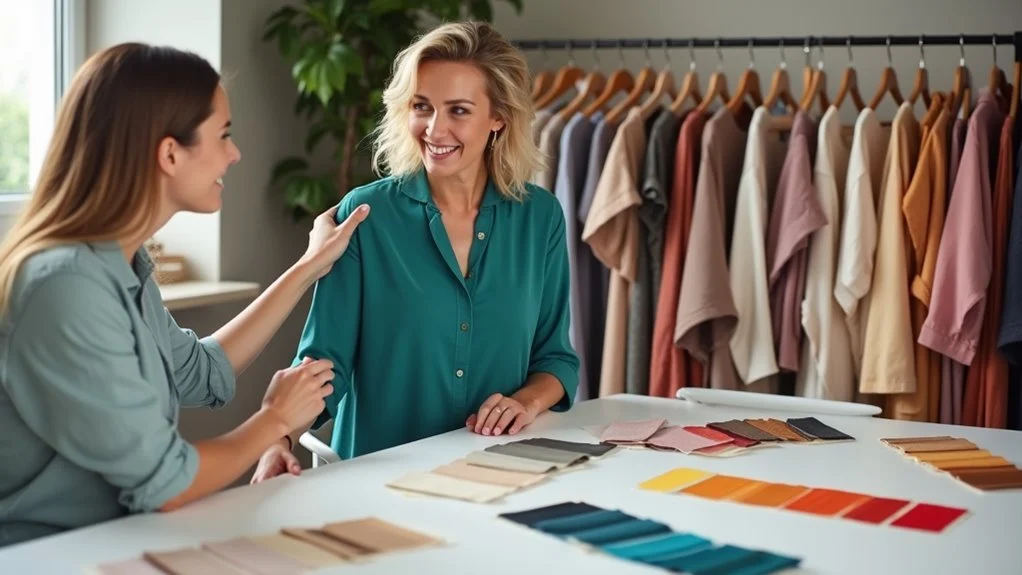
Kerry Leigh Wilson is a professional Image Consultant and the founder of New Look Image Consultancy. As the creator of the proprietary “Style Secrets” methodology, Kerry bridges the gap between Personal Branding and Color Science. Her approach is rooted in Genetic Balance, a data-driven framework that artfully blends Colour Theory with Anthropometry (the study of human body measurements) to achieve total visual harmony.
By analysing an individual’s phenotypic traits—including skin undertones, hair pigmentation, and eye colour—Kerry aligns natural aesthetics with Skeletal Silhouettes and body geometry. This innovative method moves beyond traditional styling, utilising Seasonal Colour Analysis and mathematical formulas to optimise an individual’s unique physical lines.
Based in South Africa, Kerry serves a local and global clientele through interactive technology and digital consultations. She maintains an active presence across major South African hubs, travelling between Cape Town, Port Elizabeth (Gqeberha), and Johannesburg to conduct in-person assessments, empowering clients to enhance their personal aesthetics through the intersection of science and art.