

South Africa’s coastlines require different clothing approaches. The eastern coast along KwaZulu-Natal Province experiences humid subtropical weather patterns. This region receives warm ocean currents from the Indian Ocean. Temperatures stay high throughout most months.
Quick-dry fabrics work best for KwaZulu-Natal’s coastal areas. Moisture-wicking polyester blends help manage sweat and humidity. These synthetic materials dry faster than cotton after getting wet from ocean spray or sudden rain showers.
Cape Town is situated on South Africa’s western coastline, overlooking the Atlantic Ocean. This coastal city experiences Mediterranean climate patterns with distinct seasonal changes. Winter months bring cooler temperatures and strong winds from the Atlantic.
Layered clothing systems suit Cape Town‘s variable weather conditions. Wind-resistant outer shells protect against coastal gusts. These shells block cold Atlantic winds while allowing body heat to escape during warmer periods.
The Benguela Current flows along South Africa’s west coast. This cold current creates cooler water temperatures compared to the east coast. Air temperatures drop several degrees near the Atlantic shoreline during evening hours.
Insulated clothing options help manage temperature changes along the western coastline. Base layers trap body heat during cooler periods. Mid-layers add warmth without bulk, making them ideal for activities like hiking along coastal trails.
UV-protective clothing shields skin from intense African sun exposure. The Southern Hemisphere receives direct sunlight during the summer months. Coastal areas reflect additional UV rays off water surfaces and white sand beaches.
Salt-resistant materials protect fabrics from damage caused by ocean exposure. Regular saltwater contact breaks down certain fabric fibres over time. Synthetic blends resist salt corrosion better than natural materials like cotton or wool.
Fashion retailers across South Africa stock clothing lines that are suitable for the coastal climate. Local brands understand regional climate needs and design accordingly. These companies test their products in actual South African coastal environments.
In Summary: Fabrics for Coastal Regions
Cotton fabrics work best along South Africa’s humid east coast. This natural material lets air flow through, keeping you cool when temperatures rise. Linen offers similar benefits but handles moisture better than cotton during Durban’s sticky summer months.
The west coast needs different fabric choices. Wool provides warmth when Cape Town’s evening temperatures drop. Merino wool specifically regulates body temperature while blocking wind.
Layering Strategies for Coastal Weather
Base layers matter most in humid coastal areas. Moisture-wicking synthetic materials pull sweat away from skin. This prevents that clammy feeling common in Durban’s subtropical climate.
Wind-resistant outer layers protect against coastal breezes. Cape Town’s southeastern winds can cut through regular clothing. A light windbreaker stops these gusts while allowing body heat to escape.
Weather-Adaptive Clothing Technology
Quick-dry clothing handles sudden weather shifts along South African coasts. These garments use synthetic fibers that release moisture fast. You stay comfortable when caught in unexpected rain showers.
Water-resistant outerwear blocks salt spray without trapping heat. Look for breathable waterproof membranes rather than plastic-based materials. This technology originated in sailing gear but is now commonly found in everyday coastal clothing.
Coastal Footwear Requirements
East Coast footwear needs drainage systems. Shoes with mesh panels or drain holes handle wet conditions better. The constant humidity and occasional flooding around coastal areas demand this feature.
West coast conditions call for insulated leather boots. These protect feet from cold sand and rocky shorelines. Full-grain leather resists salt damage while insulation maintains warmth during winter beach walks.
Clothing Maintenance for Coastal Living
Salt deposits damage fabric fibres over time. Fresh water washing removes these corrosive minerals before they set in. Use cold water to prevent salt from binding to clothing fibres.
UV protection sprays extend clothing life in intense coastal sun. South African coastal areas receive strong ultraviolet radiation year-round. These treatments prevent fabric fading and fiber breakdown from sun exposure.
Understanding South Africa’s Diverse Coastal Climate Zones

South Africa’s coastline stretches across multiple climate zones. Two major ocean currents shape these regions. The Benguela Current flows along the western coast. This cold-water system creates dry conditions with lower temperatures. The Agulhas Current moves along the eastern shoreline. This warm current brings moisture and higher temperatures to coastal areas.
The Western Cape experiences Mediterranean climate patterns. Winter months bring most of the annual rainfall. Summer stays dry with moderate temperatures. Cape Town sits in this zone where cool ocean air meets warm inland conditions.
KwaZulu-Natal has subtropical weather year-round. Durban receives summer rainfall from warm ocean moisture. Humidity levels stay high most months. Temperature variations remain small between seasons. Annual precipitation in Durban reaches 1,010mm, making it one of the wettest coastal cities.
The Eastern Cape sits between these two climate systems. Port Elizabeth experiences temperate conditions. This region gets rainfall throughout the year. Coastal forests grow where moisture meets moderate temperatures.
Plant life undergoes significant changes across these zones. Western coastal areas support drought-resistant vegetation. Succulents and hardy shrubs thrive in low-water conditions. Eastern regions support dense forest growth. Moisture-loving plants flourish where warm currents provide steady humidity.
Temperature differences impact daily life significantly. Western coast residents need warm clothing year-round. Residents of the eastern coast often deal with high humidity levels. Central coastal areas offer moderate conditions between these extremes. The temperature contrast between coasts creates at least a 6°C difference between eastern and western coastal cities.
Rainfall patterns vary by location and season. Western areas receive winter precipitation from cold fronts. Eastern regions get summer thunderstorms from warm air masses. This timing affects water availability and agricultural planning. South Africa’s average annual rainfall of 464 mm falls significantly below the global average, making water conservation particularly crucial for coastal communities.
Ocean temperatures influence local weather systems. Cold western waters keep air temperatures lower. Warm eastern currents heat the atmosphere above. These temperature differences drive wind patterns along the coast.
Choosing a coastal location requires understanding these climate variations. Each zone offers different living conditions. Weather patterns affect housing needs, clothing requirements, and seasonal activities.
Essential Fabrics and Materials for Year-Round Coastal Comfort
Choosing the Right Fabrics for South Africa’s Coastal Climate
South Africa’s coastline stretches over 3,000 kilometres, creating unique challenges for fabric selection. The Western Cape experiences Mediterranean conditions, whereas KwaZulu-Natal maintains subtropical humidity throughout the year.
Natural Fibres Excel in Coastal Conditions
Cotton handles moisture effectively. This fibre absorbs sweat during Cape Town’s hot summers. Linen dries quickly after exposure to sea spray. Both materials allow air circulation through their loose weave structure. Stuart Graham Fabrics offers 100% cotton options in standard widths of approximately 144cm, perfect for coastal curtains and upholstery needs.
Wool provides insulation when temperatures drop. Cape Wools SA produces merino wool that regulates body temperature naturally. This local industry creates blankets and clothing suited to coastal evening temperatures.
Water-Resistant Materials Protect Outdoor Spaces
Outdoor furniture requires specialised protection. Sunbrella fabric resists UV radiation and moisture penetration. This acrylic material maintains colour stability despite constant sun exposure along the Garden Route. Modern water-resistant coatings create protective barriers against outdoor elements while maintaining the breathability of the fabric.
Canvas treated with waterproof coatings works for awnings. Vinyl-coated polyester creates durable outdoor cushions that withstand salt air corrosion.
Traditional African Textiles Offer Cultural Value
Shweshwe cotton originates from the Eastern Cape region. This indigo-dyed fabric features geometric patterns that resist fading. Local manufacturers, such as Da Gama Textiles, produce these heritage cloths using traditional printing methods.
Lesotho wool provides warmth during the winter months. This mountain kingdom supplies South African markets with hand-spun blankets featuring distinctive patterns. The Country Cloth technique involves creating hand-spun cotton strips, which South African coastal communities incorporate into their traditional garments.
Hemp Products Deliver Durability
Hemp fibres resist mould growth in humid conditions. This plant thrives in South African soil without pesticides. Hemp bags maintain strength when exposed to sand and saltwater.
Sisal grows naturally in arid regions. This agave plant creates rope and mats that withstand coastal weather patterns. Local artisans weave these fibers into functional home accessories.
Synthetic Blends Balance Performance and Comfort
Polyester cotton blends reduce wrinkle formation. These combinations dry faster than pure cotton while maintaining breathability. Performance fabrics incorporate moisture-wicking properties for active coastal lifestyles.
Nylon adds strength to fabric weaves. This synthetic material resists tearing from wind exposure everyday along the Wild Coast.
Maintenance Protects Investment
Salt deposits damage fabric fibres over time. Regular washing with fresh water removes corrosive elements. Quick-dry treatments prevent mold formation in storage areas.
UV protection sprays extend fabric lifespan. These treatments block radiation that causes colour deterioration and fibre breakdown along sun-exposed coastlines.
Seasonal Wardrobe Strategies for East and West Coast Living
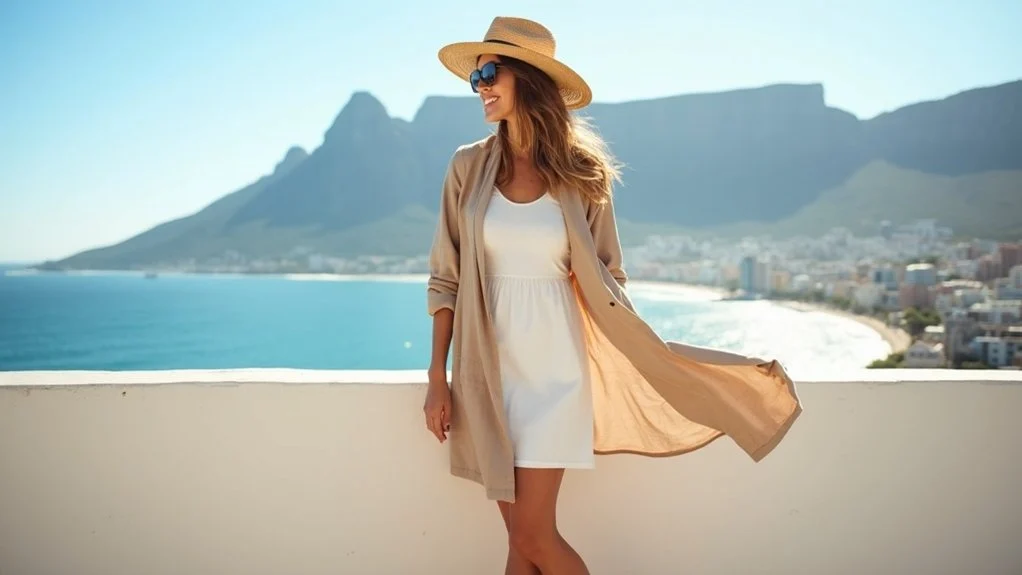
East Coast vs West Coast Wardrobe Planning for South African Climates
South Africa’s coastlines demand different clothing strategies. The eastern coast of the Indian Ocean creates subtropical conditions. The west coast of the Atlantic Ocean exhibits Mediterranean weather patterns.
Durban East Coast Clothing Requirements
Durban, the largest city in KwaZulu-Natal Province, experiences year-round humidity levels above 70%. Temperatures reach 32°C during the summer months. Cotton-blend fabrics are more suitable for daily wear than synthetic materials. The city receives approximately 1,000 mm annually of rainfall, making waterproof accessories essential.
Quick-dry shirts handle sudden afternoon thunderstorms common between October and March. Linen pants provide breathability during humid conditions. UV-protection clothing blocks intense subtropical sun exposure.
Cape Town West Coast Wardrobe Essentials
Cape Town, the legislative capital of the Western Cape Province, receives winter rainfall between May and August. Morning temperatures drop to 8°C during the winter months. Evening winds reach 40km/h speeds during summer.
Waterproof jackets protect against winter rain systems from the Atlantic Ocean. Fleece layers provide warmth during cold mornings. Wind-resistant fabrics prevent heat loss during Cape Doctor wind conditions.
Seasonal Layering Systems
East coast layering focuses on moisture management. Base layers use moisture-wicking polyester blends. Outer layers feature quick-dry nylon materials.
West coast layering emphasises temperature control. Thermal base layers retain body heat during winter. Lightweight outer shells block wind during the summer months. Winter nights frequently approach freezing temperatures, requiring additional insulation layers for evening activities.
Fabric Selection by Climate Zone
Subtropical east coast clothing requires breathable weaves. Merino wool regulates body temperature naturally. Bamboo fibre provides antimicrobial properties for humid conditions.
Mediterranean west coast garments need weather resistance. Gore-Tex fabrics repel rain while allowing vapour transfer. Softshell materials combine wind protection with breathability.
Footwear Considerations
East coast shoes need drainage features for wet conditions. Mesh panels allow air circulation. Rubber soles provide grip on wet surfaces. The province experiences bimodal rainfall, characterised by intense precipitation from October to April.
West Coast footwear requires insulation options. Leather boots protect against rain. Breathable running shoes work for dry summer days.
Navigating Ocean Current Influences on Daily Clothing Choices
Choosing Clothes for South Africa’s Coastal Weather
South Africa’s coastline stretches along two major ocean currents that shape daily weather patterns. The Agulhas Current flows southward along the eastern coast, bringing warm waters from the Indian Ocean. The Benguela Current moves northward along the western coast, carrying cold waters from Antarctica.
Ocean currents determine which clothes work best along South Africa’s dramatically different eastern and western coastlines.
Eastern Coast Clothing Strategy
The Agulhas Current creates warm, humid conditions along cities like Durban and Gqeberha (formerly called Port Elizabeth). This current system maintains temperatures around 24-26°C year-round. Your clothing needs differ from those in other coastal regions.
Cotton-polyester blends are most suitable for this climate. These fabrics pull moisture away from the skin while allowing airflow. Local South African brands, such as Sportsman’s Warehouse and Cape Union Mart, stock these materials specifically for humid coastal conditions. The Agulhas Current’s 100 cm/s velocities generate strong onshore breezes that help evaporate perspiration from technical fabrics.
Western Coast Weather Preparation
The Benguela Current produces cooler, drier air along Cape Town and the West Coast. This Antarctic current keeps water temperatures between 12-18°C throughout the year. Wind speeds increase due to temperature differences between land and ocean.
Layered clothing systems help manage these conditions. Start with base layers made from merino wool or synthetic materials. Add wind-resistant jackets for protection against coastal breezes. Remove layers as inland temperatures rise during the afternoon hours.
Where Currents Meet
Cape Agulhas marks the meeting point where the Indian and Atlantic Oceans converge. Weather patterns shift quickly in this convergence zone. Morning conditions differ dramatically from afternoon temperatures. The powerful Agulhas Current transports 70 million cubic meters of water per second through this region, creating dynamic weather conditions. The area’s notorious rogue waves can spray moisture hundreds of meters inland, requiring waterproof gear even for shore-based activities.
Pack clothing options that adapt to changing weather. Lightweight rain jackets handle sudden precipitation. Quick-dry pants work for both humid and dry conditions. This flexibility prevents the need for frequent clothing changes throughout the day.
Morning Fog Considerations
Benguela Current interactions create dense morning fog banks along western shores. Fog forms when warm air meets cold ocean water. Visibility drops significantly between 6 and 9 AM most days.
Water-resistant outer shells protect against moisture without causing overheating. These shells should include ventilation zippers for temperature control. Local outdoor retailers stock fog-specific gear designed for South African coastal conditions.
Afternoon Humidity Management
Agulhas Current regions experience peak humidity between 2-5 PM. Air temperatures combine with ocean moisture to create uncomfortable conditions. Standard cotton clothing retains moisture and stays damp.
Technical fabrics dry within 30-60 minutes after getting wet. Polyester-elastane blends maintain shape while providing stretch for active movement. These materials are initially more expensive but last longer in environments with high salt content.
Working Outdoors Along Coastlines
Ocean salt can affect the durability of fabric over time. Natural fibres break down faster than synthetic alternatives in coastal environments. Regular washing removes salt buildup that weakens clothing fibres.
Choose darker colours that hide salt stains and sand particles. Lighter colours show wear patterns more quickly in coastal settings. Navy blues and charcoal greys maintain their appearance longer than whites or pastels.
Weather patterns influenced by current conditions require specific clothing adaptations along South African shores. Understanding the effects of ocean temperature helps predict daily weather changes. Match fabric choices to local current systems for optimal comfort during coastal activities.
Answers to Your Questions
How Do I Protect My Clothes From Salt Air Damage and Fading?
Salt-resistant fabrics form your first defence against coastal air damage. Choose synthetic materials like polyester, nylon, and acrylic blends when shopping in South African coastal cities like Cape Town or Durban. These fabrics repel moisture better than natural fibres.
Cotton and linen absorb salt particles quickly. Wool becomes brittle when exposed to ocean spray. Synthetic blends maintain their structure longer in salty conditions.
Protective garment treatments create barriers against salt penetration. Fabric protector sprays available at South African retailers like Woolworths and Pick n Pay add water-repelling layers to clothing. Apply these treatments every few washes for continued protection.
Rinse exposed garments immediately after beach visits or coastal walks. Cold water removes salt crystals before they embed in fabric fibres. Hot water sets salt stains permanently into clothing.
White vinegar dissolves salt buildup that causes colour fading. Mix one cup of white vinegar with four cups of cold water. Soak affected garments for thirty minutes before washing. This process neutralises salt residue that breaks down fabric dyes.
Proper storage prevents ongoing salt damage. Clean clothes completely before hanging in closets. Moisture trapped in fabric continues salt corrosion even indoors. Use dehumidifiers in coastal areas where humidity stays high year-round.
Wash salt-exposed clothing separately from other items of clothing. Regular detergent removes surface salt but may not eliminate embedded crystals. Add half a cup of baking soda to wash cycles for deeper salt removal.
Check garment care labels before treating salt damage. Some fabrics require professional cleaning to avoid fiber damage. Delicate items like silk and cashmere need specialised treatment at dry cleaning facilities.
Store seasonal coastal clothing in breathable garment bags. Plastic bags trap moisture that activates remaining salt particles. Cedar blocks repel insects without adding chemicals that react with salt residue.
What Are Appropriate Dress Codes for South African Coastal Restaurants and Venues?
Picture enjoying fresh seafood while ocean waves crash just steps away. South African coastal restaurants offer a diverse range of dining experiences, from barefoot beach cafes to white-tablecloth establishments.
Smart Casual Rules at Upscale Coastal Venues
Most premium coastal restaurants in Cape Town, Durban, and Port Elizabeth follow smart casual dress codes. Men wear collared shirts with chinos or dress pants. Women choose sundresses, blouses with tailored pants, or casual blazers. These venues ban flip-flops, beachwear, and athletic shorts during dinner service.
Daytime Beach Restaurant Attire
Casual beachfront spots welcome relaxed clothing during lunch hours. Cover-ups over swimwear work fine at places like Camps Bay Cafe in Cape Town or uShaka Marine World restaurants in Durban. Sandals and summer dresses are perfect for an afternoon of dining.
Fine Dining Coastal Establishments
Restaurants like The Restaurant at Waterkloof in Somerset West or Azure Restaurant at The Twelve Apostles Hotel require formal attire. Men need dress shoes, long pants, and button-down shirts. Women wear cocktail dresses or elegant separates. These venues prohibit beachwear entirely.
Seasonal Considerations for the South African Coast
The summer months, from June to August, allow for lighter fabrics and open-toe shoes. Winter dining from June to August requires layers and closed shoes. Cape Town’s wind affects outdoor seating areas throughout the year.
Venue-Specific Policies
Each restaurant maintains unique standards. Please call ahead or check the website before visiting. Hotel restaurants typically enforce stricter codes than standalone beach cafes. Weekend dinner service often requires dressier attire than weekday lunches.
Regional Differences Along the South African Coast
Cape Town’s Atlantic Seaboard venues tend to be formal. Durban’s beachfront restaurants embrace casual coastal style. Garden Route establishments strike a balance between a relaxed atmosphere and high standards of presentation.
Which Coastal Clothing Brands Offer the Best Value for Money Locally?
BeachCult manufactures swimwear using recycled ocean plastics and polyester blends sourced from South African suppliers. This Cape Town-based coastal clothing brand collaborates with local artists to create unique print designs for its swimsuit collections. BeachCult’s pricing starts at R299 for basic bikinis, making sustainable beachwear accessible to budget-conscious consumers.
Sama Sama operates as an ethical fashion brand, focusing on the production of beach accessories and resort wear in Johannesburg. The company employs fair trade manufacturing practices through partnerships with local textile workshops. Sama Sama produces sun hats, beach bags, and cover-ups using organic cotton grown in KwaZulu-Natal province.
Me&B creates inclusive beachwear collections featuring sizes from XS to 4XL across their product range. This Durban-based fashion label specialises in one-piece swimsuits and bikinis designed for different body types. Me&B donates 5% of profits to coastal conservation projects along South Africa’s shoreline.
These three brands deliver coastal fashion essentials while supporting local communities through employment and environmental initiatives. South African consumers seeking beach clothing can compare prices across these manufacturers to find options matching their budget requirements. Each brand offers direct online sales with shipping to major cities across the nation.
How Often Should I Replace Sun-Damaged Beachwear and Swimwear?
You should replace your swimwear every one to two seasons when sun damage becomes noticeable. Watch for these warning signs that indicate it’s time for replacement.
Fading occurs when UV rays break down fabric dyes. Your swimsuit loses its original colour intensity after extended sun exposure. This process weakens the material structure beyond just appearance changes.
Elasticity loss happens gradually through chlorine exposure and UV damage. The fabric fails to return to its original shape after stretching. You’ll notice loose areas around the bust, waist, or leg openings.
Fabric thinning develops when synthetic fibers deteriorate from sun exposure. The material becomes see-through or develops weak spots. These areas often tear easily during normal movement.
South African fashion retailers like Woolworths and Foschini recommend checking swimwear condition before each beach season. The intense African sun accelerates fabric breakdown compared to milder climates.
Proper care significantly extends the lifespan of the swimwear. Rinse swimsuits immediately after ocean or pool use. Cold water removes salt and chlorine that speed deterioration. Air dry away from direct sunlight to prevent additional UV damage.
Store swimwear flat in cool, dry spaces between uses. Avoid folding wetsuits, which creates permanent creases and weak points. Replace elastic components when they lose tension, but the fabric remains intact.
Quality indicators help determine replacement timing. Premium swimwear from brands like Gottex or Seafolly typically lasts longer than budget options. Higher-grade Lycra and polyester blends resist sun damage better than basic materials.
Consider replacement when support decreases noticeably. Swimwear serves functional purposes beyond appearance. Proper fit prevents wardrobe issues during water activities or beach sports.
Early replacement saves money in the long term by preventing embarrassing situations that require emergency purchases at resort prices.
What’s the Best Way to Pack Light for Coastal Weekend Getaways?
You’ll pack smart by picking clothes that work together efficiently. Choose neutral colours like black, white, and beige that match everything. These basics from South African fashion brands, such as Woolworths or Mr Price, create multiple outfits from fewer pieces.
Lightweight layers solve changing coastal weather. A cotton cardigan works for cool mornings and air-conditioned restaurants. Pack one versatile dress that transitions from beach to dinner. Local fashion retailers recommend jersey fabric dresses that don’t wrinkle.
Multi-functional pieces save space. A sarong serves as a beach cover-up, scarf, or light blanket. Choose shoes that handle sand and city streets. Sandals with good support are ideal for walking and look great with dresses.
Stick to three colour combinations maximum. This rule helps every piece work with others. Pack one bottom for every two tops. Your coastal getaway wardrobe needs basics that mix effortlessly.
Rolling clothes instead of folding creates more room. Pack underwear inside shoes to use dead space. Leave room for souvenirs by packing 20% less than your bag holds.
Weather changes quickly near the ocean. Pack one warm layer even for summer trips. A light jacket or hoodie handles unexpected wind or rain. Check the local weather before packing to avoid any surprises.
Choose fabrics that dry quickly and resist wrinkles. Cotton blends and synthetic materials work well for coastal humidity. Avoid pure cotton that takes forever to dry after a day at the beach.
What is the main difference in the weather between South Africa’s east and west coasts?
The east coast (Indian Ocean) is influenced by the warm Agulhas Current, leading to a hot, humid subtropical climate. The west coast (Atlantic Ocean) is affected by the cold Benguela Current, resulting in a cooler, drier Mediterranean climate.
Why do local South African clothing brands often perform better in coastal climates?
Local brands like Woolworths and Mr Price have a deep understanding of the specific microclimates and regional needs, leading them to stock and design clothing made from materials that are best suited for the local conditions, such as quick-dry fabrics for humidity and wind-resistant layers for gusts.
What are the best fabrics for dealing with high humidity on the East Coast?
Quick-dry fabrics like polyester blends and natural fibres like linen and bamboo are best. They wick moisture away from the skin and dry quickly, preventing the clammy feeling associated with high humidity.
My Pro Opinion on Dressing for Coastal Areas
You now know how to dress for South Africa’s coastal areas. The Indian Ocean creates different weather patterns along the country’s shoreline. The Agulhas Current flows along the east coast, bringing warm water from the tropics. This ocean current keeps cities like Durban warmer throughout the year.
The Atlantic Ocean has a different impact on the West Coast. Cape Town experiences cooler temperatures because cold water from Antarctica flows up. The temperature difference between these two coasts remains constant at 6°C year-round.
Durban requires lightweight clothing most of the time. Cotton and linen are well-suited for this humid subtropical climate. The city sits in KwaZulu-Natal province, where moisture from the warm ocean creates sticky conditions.
Cape Town demands layered clothing options. This city in Western Cape province faces cool ocean winds regularly. Wool sweaters and windproof jackets become necessary items here.
Your fabric choices matter more than fashion trends. Natural materials breathe better in coastal humidity. Synthetic fabrics trap moisture against your skin.
Seasonal changes affect both coasts but in different ways. Summer brings heat to Durban, while Cape Town enjoys mild temperatures. Winter makes Cape Town chill,y while Durban stays warm.
Local fashion retailers understand these climate differences. Stores like Woolworths South Africa and Mr Price stock region-appropriate clothing. Their buyers know which materials work best for each coastal area.
Bright dressing means matching your wardrobe to your specific location. Pack heavy layers for Cape Town visits. Choose breathable fabrics for Durban trips. This approach keeps you comfortable regardless of which coast you visit.

Kerry Leigh Wilson is a professional Image Consultant and the founder of New Look Image Consultancy. As the creator of the proprietary “Style Secrets” methodology, Kerry bridges the gap between Personal Branding and Color Science. Her approach is rooted in Genetic Balance, a data-driven framework that artfully blends Colour Theory with Anthropometry (the study of human body measurements) to achieve total visual harmony.
By analysing an individual’s phenotypic traits—including skin undertones, hair pigmentation, and eye colour—Kerry aligns natural aesthetics with Skeletal Silhouettes and body geometry. This innovative method moves beyond traditional styling, utilising Seasonal Colour Analysis and mathematical formulas to optimise an individual’s unique physical lines.
Based in South Africa, Kerry serves a local and global clientele through interactive technology and digital consultations. She maintains an active presence across major South African hubs, travelling between Cape Town, Port Elizabeth (Gqeberha), and Johannesburg to conduct in-person assessments, empowering clients to enhance their personal aesthetics through the intersection of science and art.