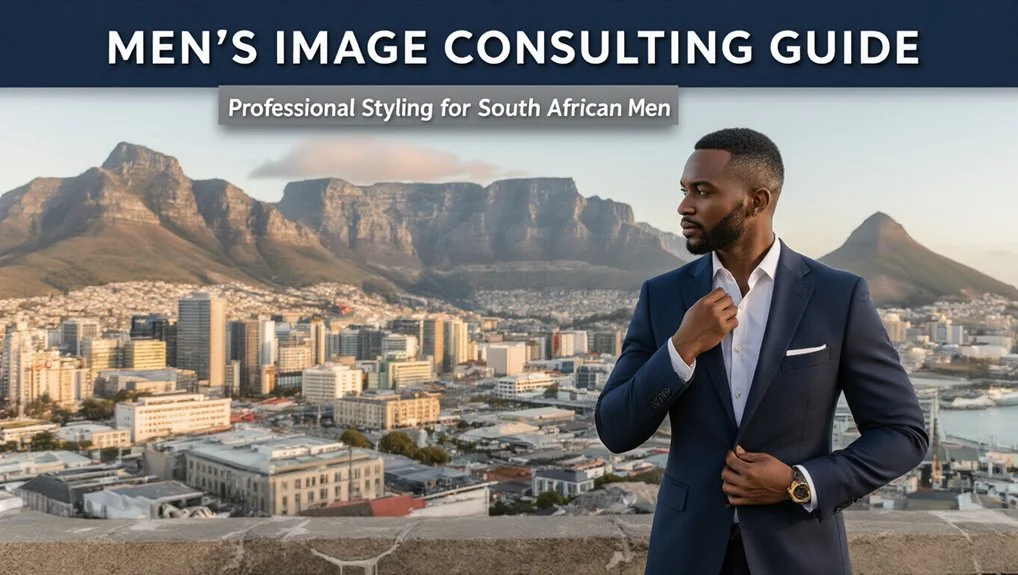

Solid colors create strong headshot images that highlight your face, not your clothes. Navy, charcoal, and deep jewel tones work best in professional photos.
South African fashion experts recommend natural fabrics like wool and cotton that prevent camera glare.
A well-fitted suit or sheath dress with a blazer forms a clean, professional silhouette. Check that shoulders sit correctly and collars stay flat. Keep jewelry subtle – small earrings or a classic watch add polish without distraction.
Press your chosen outfits and bring backup options. Leading Johannesburg photographers note that wrinkles show clearly in professional portraits.
Simple, quality pieces photograph better than busy patterns.
The colours you wear influence how others perceive you. Navy conveys trust, charcoal projects authority, and jewel tones add warmth while maintaining professionalism.
These colour choices align with South African corporate culture preferences for refined business attire.
In Summary
Solid colors create impact in professional headshots. Navy, charcoal, black, and jewel tones photograph well. These colours let your face be the focus.
Men perform well in tailored suits with white or light blue shirts. Women succeed with structured blazers or knee-length dresses. Top South African image consultants suggest clean necklines that frame the face.
Keep jewellery subtle. Small pearl or diamond studs work. Skip large necklaces or dangling pieces. Leading Pretoria photographers note that bold accessories compete with facial expressions in headshots.
Your outfit supports your professional image. Simple choices photograph better than complex ones. South African fashion industry research shows minimal styling creates lasting professional portraits.
Essential Wardrobe Pieces for Men’s Professional Headshots

Professional Headshot Clothing Guide for South African Men
A well-planned wardrobe creates impactful professional headshots. Navy, charcoal, and black suits from South African retailers like Woolworths and Markham photograph clearly against standard backgrounds. Crisp white or powder blue button-downs from local brands provide versatile base layers. Bring backup options to your session for flexibility in creating the perfect look.
Semi-formal settings allow merino wool sweaters or cotton-blend zip-ups from Cape Union Mart over collared shirts. Solid ties in deep tones work best – avoid busy patterns that distract from facial features. Business-casual environments suit quality polos from local makers like Polo SA paired with structured jackets. Test your outfit by sitting down before the session – if your shirt bunches up, it’s too large and needs adjustment.
Proper fit remains key: shoulders should align naturally, collars should sit flat, and fabrics should drape smoothly without pulling. South African tailors can adjust garments for an ideal silhouette that translates well on camera. Well-tailored attire ensures a polished appearance that conveys professionalism and attention to detail.
Tips for South African climates:
- Choose breathable natural fabrics
- Layer lighter pieces for versatility
- Select wrinkle-resistant materials
- Pick colours that complement various skin tones
- Ensure clothes are pressed and lint-free
These wardrobe elements help create professional images that work across corporate, creative, and entrepreneurial settings in the South African business landscape.
Women’s Professional Headshot Outfit Combinations
Professional women in South Africa have distinct headshot outfit options that create visual impact while maintaining corporate standards. A fitted sheath dress with a tailored blazer provides structure and authority in photographs. South African fashion experts recommend deep jewel tones like sapphire or emerald, which complement diverse skin tones and photograph well against standard backgrounds. These vibrant colors naturally draw attention to the face while avoiding the drab appearance common in corporate photography.
Accessories require strategic selection. Small pearl or diamond studs frame the face without overwhelming it. A classic timepiece adds sophistication while staying within the frame. The neckline becomes a focal point – choose clean lines like boat necks or subtle V-necks that draw attention upward. Professional headshots serve as vital tools for establishing a strong professional image and enhancing visibility within competitive South African business networks.
Key considerations for South African corporate environments:
- Solid colors photograph better than prints
- Dark colors convey authority
- Structured pieces create clean lines
- Simple jewelry enhances without distracting
- Necklines frame facial features
The outfit communicates capability and professionalism through visual elements that South African business culture recognizes. Avoiding clothing that matches the skin tone prevents the unflattering appearance that often occurs when images are viewed at smaller sizes. Each piece serves a specific purpose in building a cohesive professional image that translates effectively in headshot photography.
This approach aligns with current South African corporate dress codes while allowing for individual expression within professional parameters. The goal remains clear: project competence and trustworthiness through deliberate styling choices that support career objectives.
Colour Psychology and Fabric Choices for Maximum Impact

Colour and fabric choices create impact in professional headshots through specific psychological triggers. South African fashion experts at Woolworths and Truworths confirm that navy blue builds credibility in corporate settings, while black signals leadership across industries. Red clothing projects energy and confidence, making it effective for entrepreneurs and creative professionals seeking dynamic representation.
The South African climate influences fabric selections. Local fashion houses like Country Road and Poetry recommend natural fibres that work well in varied temperatures. Matte cotton keeps the focus on facial features, while structured wool maintains professional lines in air-conditioned offices. Cream and ivory tones offer classic alternatives to pure white, providing better dimension and accessorising opportunities in photographs.
South African skin tones range widely, requiring thoughtful colour matching. Fashion stylists at Edgars and Mr Price suggest cool blues for lighter complexions common in urban areas. Warmer earth tones enhance deeper skin tones prevalent across provinces. Local designers like Thula Sindi and David Tlale emphasise selecting colours that reflect both professional goals and natural colouring. Bringing multiple clothing options allows flexibility to match unexpected backgrounds during the shoot.
Texture choices affect image quality. Cape Town photographers recommend avoiding shiny fabrics that create glare under studio lights. Instead, subtle weaves add visual interest while maintaining a polished look suitable for corporate headshots.
The right combination of colour and fabric helps professionals present themselves effectively across South Africa’s diverse business landscape. These choices support career growth in both traditional and creative sectors.
Styling Mistakes to Avoid When Preparing for Your Headshot Session
Getting Ready for Your Professional Headshot: Style Guide
Clean, solid colours make your face stand out in headshots. South African fashion experts recommend navy blue, charcoal grey, or burgundy for corporate images. Tight or loose clothing creates unwanted distractions – choose pieces that fit well at the shoulders and waist. Avoid busy patterns that compete for attention and diminish the professional quality of your headshot.
Professional makeup artists in Johannesburg and Cape Town suggest using minimal foundation with a matte-finish powder. Studio lighting shows every detail, so natural-looking makeup works best. Keep hair styled but not stiff – top stylists at Carlton Hair International advise against trendy cuts for timeless headshots. Remove distracting jewellery like dangly earrings and chunky necklaces that pull focus away from your face.
Your body language tells a story. The Photography Society of South Africa recommends relaxed shoulders and a genuine expression. Think about having a friendly chat rather than posing. Small accessories like a classic watch or simple earrings add personality without taking over the image. A slight turn or tilt of your head creates more dynamic and engaging photos than facing straight forward.
Pre-session preparation matters:
- Schedule hair appointments 2-3 days before
- Test makeup in natural light
- Steam or press clothing
- Check nails and eyebrows
- Bring backup outfit options
Top photography studios in Sandton and Rosebank emphasise that comfort leads to confidence. When you feel good, it shows in your expression. The goal: a professional image that represents your authentic self.
My Answers to Your Questions
Should I Wear My Glasses or Contact Lenses for the Headshot?
Choosing between glasses and contacts for your headshot depends on your everyday appearance. Professional photographers in South Africa’s fashion industry suggest wearing what represents your authentic self.
Photographers at top Cape Town studios use advanced lighting techniques to minimise glare from glasses. The flash positioning and light diffusion eliminate unwanted reflections.
Contact lenses work well for short photo sessions lasting 30-45 minutes. Extended shoots may cause eye fatigue or dryness, affecting your natural expression.
South African modeling agencies recommend capturing images both with and without glasses. This gives flexibility for different professional uses:
- Client recognition matches daily appearance
- Portfolio versatility
- Brand consistency across materials
The choice affects how people identify you professionally. Consider:
- Daily eyewear habits
- Shoot duration
- Usage requirements
- Comfort level
Photographers at Johannesburg fashion houses emphasise authentic representation over temporary changes. Your headshot should reflect your regular professional appearance for genuine client connections.
How Many Outfit Changes Should I Bring to the Photoshoot?
Professional photographers in South Africa recommend bringing 3-4 outfits to a photoshoot. This range works for personal branding, corporate headshots, and fashion portfolios.
A typical 60-minute session allows time to change between:
- One formal business outfit
- One smart casual look
- One industry-specific outfit
- One backup option
Cape Town fashion consultant Sarah Mitchell suggests coordinating colors across outfits for a cohesive portfolio. Dark colors photograph well in studio settings, while outdoor shoots accommodate brighter tones.
Key considerations:
- Weather conditions affect fabric choices
- Studio lighting impacts color selection
- Quick-change options save session time
- Wrinkle-resistant materials maintain quality
- Accessories transform basic looks
Pack outfits in garment bags to keep them neat. Bring basic styling tools and safety pins for adjustments. Professional studios offer changing rooms and mirrors for outfit transitions.
South African photographers indicate this outfit count balances variety with time management, letting clients showcase different aspects of their brand or personality within the scheduled timeframe.
Can I Wear My Company Uniform or Branded Clothing?
Wearing company uniforms or branded clothing in South Africa is subject to specific workplace guidelines. Major retail chains like Woolworths, Mr Price, and Truworths require staff to wear their branded attire during work hours. The uniform must be clean, pressed, and fit properly to maintain professional standards.
South African fashion industry practices show that branded clothing helps customers identify staff members quickly. Your uniform represents your organisation’s identity and values. Many local companies provide uniforms as part of their employee benefits package.
Consider these practical points:
- Check your company dress code policy
- Ensure branding remains visible and undamaged
- Keep uniforms well-maintained and wrinkle-free
- Wear appropriate shoes that match uniform standards
- Remove uniform after work hours when in public spaces
The South African Clothing and Textile Workers Union (SACTWU) guidelines state employers must provide clear uniform policies. Your branded clothing serves as a professional tool, creating consistency across customer interactions and workplace operations.
For retail and service roles, uniforms build trust with customers and show company commitment. Branded clothing in corporate settings often includes logo-embroidered shirts or specific color schemes that align with company branding.
Should My Outfit Match My Linkedin Profile or CV Photo?
Aligning your professional photos creates consistency in your job search. South African recruitment specialists at Michael Page and Robert Walters confirm that matching outfits in LinkedIn and CV photos helps establish a clear personal brand.
Professional stylists from Fashion Week South Africa recommend choosing classic business attire that translates well across digital platforms. The outfit should reflect current South African corporate culture while remaining timeless.
Key considerations for photo outfit matching:
- Select versatile business wear that works in both digital formats
- Use solid colors that reproduce well online and in print
- Ensure the outfit meets South African corporate dress codes
- Choose fabrics that photograph consistently across mediums
Your professional photos serve as visual anchors for recruiters. When they move between your LinkedIn profile and CV, consistent presentation makes you instantly recognizable. This visual continuity strengthens your personal brand and shows attention to detail – qualities South African employers value.
The SA fashion industry suggests updating both photos if you make significant style changes. This maintains the professional image alignment that helps recruiters connect with your application materials efficiently.
How Far in Advance Should I Try on My Chosen Outfits?
Plan your outfit trial session seven days before your photoshoot. Professional photographers in South Africa recommend this timeframe to evaluate how different fabrics reflect light and capture on camera. Local fashion experts from Johannesburg Fashion Week suggest testing color combinations in various lighting conditions. This window allows time to swap items, make alterations, or source new pieces from South African retailers if needed.
Use this preparation period to check:
- How fabrics photograph under studio lights
- Color harmony between pieces
- Fit adjustments required
- Compatibility with location settings
South African fashion stylists advise against leaving outfit choices to the last minute, as common issues like loose buttons or minor alterations need time to address. Professional image consultants at the South African Fashion Council emphasize that well-planned outfits boost confidence during the shoot.
The seven-day buffer helps create images that represent your service or brand effectively. This timeline matches standard preparation protocols used by leading Cape Town modelling agencies and corporate photography studios.
My Expert Take On This
Professional headshots require strategic outfit choices that enhance your image. Select well-fitted, classic clothing pieces that align with South African corporate standards. Solid colours work better than patterns, with navy blue, charcoal grey, and deep burgundy performing well across different skin tones in professional photography.
Your clothing connects directly to how others perceive your professional capabilities. Consider the industry standards: financial services lean towards formal suits, while creative sectors allow smart casual. South African workplaces often blend Western corporate wear with local contemporary styles.
Practical tips for headshot success:
- Choose necklines that frame your face
- Ensure proper fit across the shoulders and chest
- Select wrinkle-resistant fabrics
- Keep jewellery minimal and professional
- Maintain focus on facial features
Clothing choices impact photo quality and professional image. Dark colours photograph well but avoid pure black, which can lose detail. Light colours can wash out skin tones under studio lighting. Professional photographers in Johannesburg and Cape Town recommend mid-tone garments for optimal results.
Your outfit supports your professional narrative. Business attire signals capability and trustworthiness to potential employers and clients. The right clothing choice amplifies your presence without overshadowing your face – the central focus of any professional headshot.
References
- https://www.bridgetcorke.co.za/articles/headshot/wear-headshots
- https://www.thestudiopod.com/how-to-take-headshots/female-executive-outfits
- https://www.allaboutheadshots.com/blog/what-to-wear-for-professional-headshots-a-guide-for-men
- https://www.koby.photography/blog/how-to-dress-and-prepare-for-professional-headshot-photography-guide-from-a-london-photographer
- https://saracoffinphoto.com/how-to-select-a-killer-outfit-for-headshots/
- https://shutterxposures.co.za/what-to-wear-for-headshots/
- https://www.youtube.com/watch?v=90ii9tPDn34
- https://www.cfcommunications.co.za/spokesperson-photo-shoot-guidelines/
- https://block-studios.com/what-to-wear-for-mens-business-headshots/
- https://www.ac-styles.com/blog/what-to-wear-for-professional-headshots/

Kerry Leigh Wilson is a professional Image Consultant and the founder of New Look Image Consultancy. As the creator of the proprietary “Style Secrets” methodology, Kerry bridges the gap between Personal Branding and Color Science. Her approach is rooted in Genetic Balance, a data-driven framework that artfully blends Colour Theory with Anthropometry (the study of human body measurements) to achieve total visual harmony.
By analysing an individual’s phenotypic traits—including skin undertones, hair pigmentation, and eye colour—Kerry aligns natural aesthetics with Skeletal Silhouettes and body geometry. This innovative method moves beyond traditional styling, utilising Seasonal Colour Analysis and mathematical formulas to optimise an individual’s unique physical lines.
Based in South Africa, Kerry serves a local and global clientele through interactive technology and digital consultations. She maintains an active presence across major South African hubs, travelling between Cape Town, Port Elizabeth (Gqeberha), and Johannesburg to conduct in-person assessments, empowering clients to enhance their personal aesthetics through the intersection of science and art.